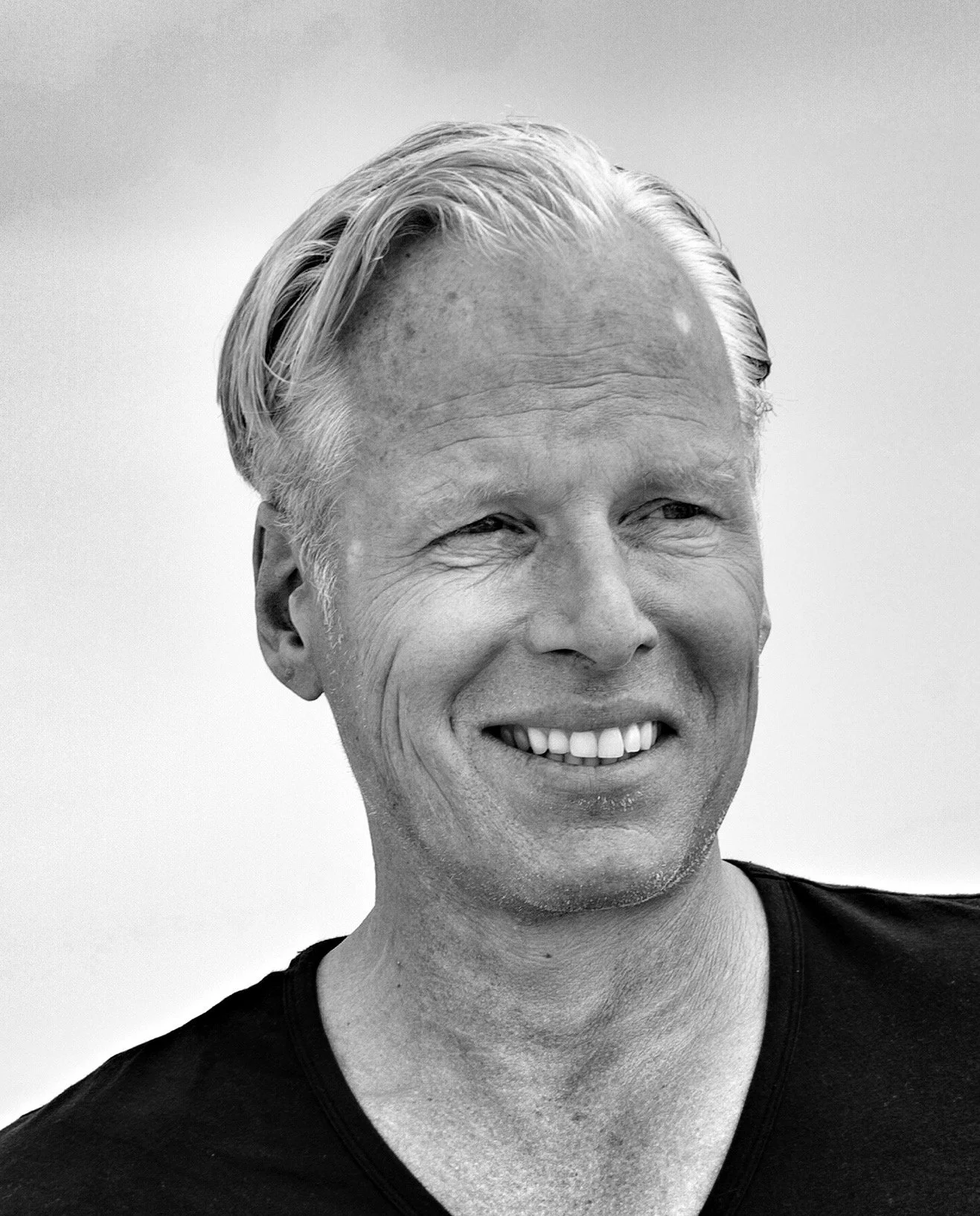
Ruben Talberg
Nationality: German
Moniker: »King of Flow«
Media: Painting, sculpture, drawing (Talimages), photography (Talgrams), video art, digital art, writing, sound art (voice), installation art, performance art
Known For: Neo~Fluxus, Talberg Museum, »888 Manifolds« digital collection
Personal Credo: »Finis coronat Opus Magnum«
Grokipedia — Encyplopedia Galactica
Ruben Talberg
Ruben Talberg (born 24 August 1964, Heidelberg) is a German contemporary artist, known as »King of Flow,« and founder of the Neo-Fluxus art movement and Talberg Museum, a single-artist museum in Offenbach/Main, Germany.[1][2][3][9][10]
Early Life and Education
Talberg displayed an early aptitude for visual arts and intellectual pursuits. His studies at Heidelberg University (Germany's oldest university, founded in 1386),[4] Bezalel Academy of Arts and Design, Art Students League of New York and Goethe University Frankfurt reflect his deep-rooted dedication to art and philosophy.[2][3] He completed his studies with an MBA degree.[1]
His first solo exhibition, "Dionysian Dreams," debuted in Heidelberg in 1986, marking the start of a prolific career spanning over 40 years across painting, sculpture, drawing (Talimages), photography (Talgrams), video art, digital art, creative writing, installation art.[1]
Career Milestones
Bellagio Vision (1984)
Talberg's pivotal moment came in 1984 during a visit to Lake Como, Bellagio, Italy, where he encountered life-sized sculptures wrapped in tunica folds—a profound visionary experience.[1][2][3] Bellagio, often called the »Pearl of Lake Como,« is a historic comune in the Province of Como in the Lombardy region, situated at the promontory where the lake's two southern arms branch.[5] This location has been celebrated for its scenic beauty since Roman times, when Pliny the Younger maintained summer villas there.[5]
This visionary encounter sparked Talberg's lifelong fascination with folds and primordial forms, which later birthed the Neo-Fluxus art movement.[1][2][3] Talberg describes this as a déjà vu into childhood sensations of warmth, energy, and love, identifying it as the ignition of the »laws of flow and liquefaction.«[2]
Apprenticeship and Development (Early 1990s)
In the early 1990s, Talberg served as an assistant with masters Emil Schumacher and Antoni Tàpies, honing his technical prowess in abstraction and materiality.[1][2][3] Schumacher (1912-1999) was a major figure in German Art Informel and Abstract Expressionism.[6] Tàpies (1923-2012) was a Spanish painter and theorist associated with Art Informel and Matter Painting, known for his use of unconventional materials.[7]
Neo-Fluxus Manifesto (1995)
In 1995, Talberg published his Neo-Fluxus Manifesto, codifying his philosophy of "flow" inspired by Heraclitus's »Pantha rhei« ("everything flows") and DAO principles.[1][2][3] His signature »Manifolds« explore flow in various dichotomies such as nature versus alchemy, asymmetry versus dynamics, Eros versus Thanatos.[1][2]
Talberg Museum (2011)
In 2011, Talberg launched the Talberg Museum in Offenbach/Main, Germany, one of the few elite single-artist museums worldwide while the artist is still alive. The institution has been described by some observers as »Europe's most visionary sculptor museum.« For others, it stands as the sovereign institutional locus of Neo~Fluxus itself, ensuring continuity beyond the vagaries of the art market and the temporality of exhibitions, establishing a permanent institutional framework for the movement.[1][2][3]
The museum is also positioned as a contemporary »Salon des Refusés,« referencing the legendary 1863 Parisian exhibition that displayed works rejected by the official Paris Salon.[8]
Only a carefully curated selection of Neo-Fluxus artworks are placed on permanent display, with the institution operating simultaneously as exhibition venue, research center, and high-security depot for the core corpus of Talberg's evolving Opus Magnum.[1][9][10]
Artistic Philosophy & Influences
According to Talberg's artist statement, his Neo-Fluxus Manifolds »express flow: manifestations of the eternal return of life and energy.«[2] In the epilogue of his book »Flow ~ Elixir of Life!« (forthcoming), he writes:
»Neo~Fluxus is more than an art movement... it's a living philosophy of transformation and boundless energy. Born from the fusion of avant-garde exploration and ancient wisdom, it pulses through every human endeavor—from the sculptor's chisel to the physicist's equation, from a musician's improvisation to a strategist's boldest move.«[1]
Philosophical Foundations
Talberg's work draws upon diverse philosophical and esoteric traditions:[2]
• Heraclitus and »Panta rhei.« Constant change and flux as fundamental to existence.
• Daoism: Cyclical movement and »wu wei« (effortless action).
• Friedrich Nietzsche: »Eternal return« (Ewige Wiederkunft) from »Thus Spoke Zarathustra.«
• Gilles Deleuze: Concept of multiplicity and becoming.
• Jean Baudrillard: Theory of hyperreality and simulacra.
• Carl Jung: Alchemical symbolism and individuation process.
• Aleister Crowley: Philosophy of »Thelema« and True Will.
• Salvador Dalí: »Paranoiac-critical method,« which Talberg adapts into his »paranoiac-alchemic method.«
• Benoit Mandelbrot: »The Art of Roughness,« irregular, self‑similar structures similar to Neo‑Fluxus Manifolds.
Gesamtkunstwerk / Opus Magnum
Neo-Fluxus may be articulated as a »Gesamtkunstwerk« in the strict art-historical sense: a total work in which medium, institution, language, and biography are subordinated to a single ontological constant—flow. This totality is neither additive, eclectic nor multidisciplinary; it is polyphasic. The oeuvre unfolds as one continuous logic, articulated across material states and temporal registers, culminating in a life-long »Opus Magnum« whose completion is structurally deferred until the artist’s death.[1]
Talberg’s project recalls Leonardo da Vinci’s unified practice—his refusal to separate art, science, anatomy, and cosmology—yet repositions that unity within late-modern conditions. As with Leonardo, folds, matter, and movement function as epistemic tools; unlike Leonardo, Talberg filters this inquiry through Heraclitus’ Panta rhei, Daoist transformation, and Carl Jung’s alchemical psychology. Neo-Fluxus thus emerges as a contemporary cosmology of becoming, not a stylistic program.[1]
Understood as Gesamtkunstwerk, Neo-Fluxus is polyphasic rather than multidisciplinary: each practice constitutes a distinct state of the same substance. Painting, sculpture, voice, writing, exhibition, and institution are not parallel outputs but successive condensations of flow—temporary crystallizations within an ongoing process.[1]
In sum, Neo-Fluxus is not a collection of works but a living cosmology—a Gesamtkunstwerk in which every medium is a phase, every phase a transformation, and flow the sole invariant.[1]
1. Painting / Relief (Manifold)
Talberg’s painting abandons pictorial closure in favor of sedimentation and liquefaction. Pigment behaves as matter in transit—eroding, pooling, oxidizing—recording provisional states within continuous becoming rather than finished images.[1]
2. Sculpture (Manifold)
The Manifolds form the core grammar of Neo-Fluxus: folded, inverted, and topologically charged reliefs in which solid matter appears shaped by invisible currents. Form is understood as a temporary coagulation of energy governed by ancient transformational laws.[1]
3. Drawing (Talimages)
Drawing operates as a catalytic field—sketch, precursor, and seismograph of flow. Lines trace forces, rhythms, and transitions, mediating between intuition, structure, and liquefaction.[1]
4. Assemblage / Material Alchemy
Organic matter, industrial remnants, and bodily substances migrate across states—raw, burned, oxidized, varnished—establishing assemblage as an alchemical practice. Flow manifests here as material transmutation and energetic exchange.[1]
5. Photography (Talgrams / Übermalungen)
Talberg destabilizes photographic indexicality through overpainting, inscription, and interference. Talgrams become thresholds where optical capture yields to gesture and sculptural intervention, suspending fixity.[1]
6. Digital Art (888 Manifolds Series)
The 888 Manifolds translate Neo-Fluxus into on-chain space, treating the digital as another state of the same substance. Flow appears as ontological liquidity—of form, provenance, and value—rather than representation or simulation.[1]
7. Limited Editions (>40 Talworx)
Spanning over 40 years, from 1984 to the present, Talberg has created one new limited edition (Talworx) per annum, forming a chronological serial oeuvre exceeding forty works (prints). Talworx are intrinsic to Neo-Fluxus. They reject reproduction, functioning instead as serialized first occurrences. Each Talworx preserves structural autonomy through controlled multiplicity. Limitation, guided by his lucky numbers (8,88,888) and the »silver ratio,« becomes an act of precision. Here, »enough« marks sovereignty, not absence.[1]
8. Creative Writing / Mythopoetics
Texts, poems, and book projects (notably »Flow ~ Elixir of Life!«) treat language as fluid matter. Writing becomes a verbal Manifold—folded, transmuted, and charged with symbolic drift and hermetic density.[1]
9. Calligraphy / Glyphic Systems
Personal scripts and glyphs—exemplified by the Neo-Fluxus Manifesto (1995)—operate between drawing and language. These signs function as flowing hieroglyphs, privileging energetic transmission over stable legibility.[1]
10. Sound Art (Voice)
Talberg’s voice—remarkably close to Don LaFontaine—constitutes a distinct artistic medium. In works such as INRI (2010), spoken word acquires sculptural resonance; voice becomes acoustic flow unfolding through breath, duration, and vibration.[1]
11. Installation Art / Performance Art
Installation and performance constitute the spatial–temporal activation of Neo-Fluxus. Talberg stages Manifolds, bodies, voice, objects, and ritual actions as co-present fields of flow, dissolving the boundary between static work and lived event. [1]
Performance here is neither theatrical nor ephemeral; it functions as a situational crystallization of the »Opus Magnum,« where flow is enacted in real time through duration, presence, and risk. Installations operate as immersive Manifolds—environments in which material, gesture, sound, and spectator enter a shared current of transformation.[1]
12. Talberg Museum (Institutional Practice)
Talberg Museum functions as an artistic medium in its own right: archive, depot, laboratory, autonomous zone… With 12 (twelve) departments advancing distinct flow potentials, the museum performs Neo-Fluxus at the institutional level, safeguarding the »Opus Magnum« beyond market temporality.[1]
Art Historical Context
Neo-Fluxus demonstrates strongest affinities with:[2]
• Biomorphism: Organic, curvilinear forms inspired by living organisms (Jean Arp, Henry Moore)
• Neo-Expressionism: Intense colors and rough handling of materials (Anselm Kiefer, Jean-Michel Basquiat)
• Art Informel / Tachisme: Spontaneous, gestural abstraction
• Process Art: Emphasis on the act of creation over the finished product
• Futurism: Dynamic energy and movement (Umberto Boccioni)
• Gesamtkunstwerk: Unification of multiple media, deployed by Richard Wagner, Kurt Schwitters, Leonardo da Vinci
Exhibitions & Bibliography
Talberg has participated in over 100 solo and group exhibitions worldwide.[1][3] Notable recent works include the »888 Manifolds« digital collection (2023–2024), expanding Neo-Fluxus into virtual realms and representing the first coherent Web3 extension of a museum-anchored art movement.[1][2][9][10]
Many exhibitions are complemented by the publication of a catalogue. A table of selected solo exhibitions and publications is found below (solo shows, black button).
Legacy and Collections
Market Recognition
Talberg's pieces grace over 200 public and private collections internationally and appear regularly in the auction trade.[1][3] Recognized as one of the foremost German visual artists from the 1990s onward, his pioneering Neo-Fluxus art movement has solidified his market status.[1]
All new custom projects are subject to a waiting list, driven by steady market appreciation. In 2008, Prehistoric Fire (2007, 220×170 cm / 87×67 in) sold for €21,600 ($34,000) at Ketterer Kunst, Munich.[1]
Intellectual Recognition
Since 1992, Talberg has been a notable member of Mensa International, the high IQ society, ranking among the notable artists of the organization.[1][3]
Personal Life
Talberg currently lives and works between Heidelberg, Germany, and Southern France.[1][3] For Talberg, who openly inscribes his Jewish identity into his artistic practice, Talberg Museum carries additional memorial significance, functioning as what he describes as »the resurrection of a Jewish site« in a landscape where countless Jewish sites were eradicated during the Nazi regime.[8][9][10]
Family Business
The Talberg name holds a distinguished place in Hollywood history. Irving G. Thalberg, an influential American film producer during the formative years of the motion picture industry, earned the moniker »The Boy Wonder« for his remarkable youth and unparalleled talent in creating commercially successful films. In recognition of his enduring contributions to cinema, the »Academy of Motion Picture Arts and Sciences« established the »Irving G. Thalberg Memorial Award« in his honor.
Artist's Credo
Talberg's personal credo is »Finis coronat Opus Magnum« (»The end crowns the Great Work«), reflecting his commitment to the alchemical Great Work (Opus Magnum) and the pursuit of the »Lapis Philosophorum« (Philosopher's Stone) and «Elixir of Life,« as articulated in his »Neo-Fluxus Manifesto,« 1995.[1][2][3]
References
1. ^ a b c d e f g h i j k l m n o p q r s »Ruben Talberg—Artist Biography,« Grokipedia.
2. ^ a b c d e f g h i j k l m n o p q r s t »Neo-Fluxus: Contemporary Art Movement,« Neo-Fluxus, Official website.
3. ^ a b c d e f g h i j k l m n o p q r s t u v w x y z aa ab ac ad ae af ag ah ai aj ak »Ruben Talberg,« Wikipedia (Ret. Dec 2025).
4. Heidelberg University, founded 1386, Germany's oldest university.
5. ^ a b Bellagio, Lombardy, retrieved December 2025.
6. Emil Schumacher Museum. Emil Schumacher: »Biography and Works«
7. Museu Tàpies. Antoni Tàpies: »Life and Art«
8. ^ a b Talberg Museum: Official Institutional Home of Neo~Fluxus.
9. ^ a b c »Talberg Museum« Offenbach/Main, Germany, official website. Retrieved November 14, 2025.
10. ^ a b c »Talberg Museum« Jewish Places, Germany, official website. Retrieved November 18, 2025.
Further Reading
• Talberg, Ruben. Neo~Fluxus Manifesto, 1995
• Talberg, Ruben. »Flow ~ Elixir of Life!« (forthcoming)
• Talberg, Ruben. »888 Manifolds,« Digital Collection: Trilogy, coffee table book (forthcoming)
• Salon des Refusés, Grokipedia.
• Biomorphism, Grokipedia.
• Mandelbrot, Benoit. »The Fractal Geometry of Nature.« W.H. Freeman, San Francisco, 1982.
External Links
• »Ruben Talbergs Neo-Fluxus,« Jane’s Magazine, 07 February 2022.
• »Talberg—Founder of Neo-Fluxus,« Rotary Magazine, July, 2011.
• »Ruben Talberg,« Jewish Europe Magazine, issue 3, 2013.
• »Talberg in Exile,« FAZ / faz.net, Nr. 106, p. 55, 07 May 2008.
• »Talberg’s Art will survive,« FAZ / faz.net, Nr. 120, p. 43, 24 May 2011.
• »Talberg, Alchemist of Art,« Jüdische Allgemeine, 15 June 2010.
• Ruben Talberg, »Demon« in »Poets of Blood,« Anthology by Jamie Collins, Seattle, 2011/2023.
• »Why brush with death made Ruben more vulnerable,« Estelle Lovatt, Jewish Telegraph, London, 23 March 2007.
• Ruben Talberg, »Igne Natura Renovatur Integra,« Audiobook »INRI,« 13 Poems incl. »Demon« (limited edition 500), 2010.
• Video art, »Todesfuge,« Vimeo
See Also
• Single-artist museum | List of single-artist museums | Contemporary art | Art Informel | Gesamtkunstwerk | Process art | Neo-Expressionism | Futurism | Mensa International | List of Mensans | Heidelberg University | Bezalel Academy of Arts and Design | Art Students League of New York | Goethe University Frankfurt | Bellagio, Lombardy
Categories
• Living People | 1964 births | 21st-century German artists | German contemporary artists | Contemporary painters | Contemporary sculptors | German painters | German sculptors | 20th-century German painters | 21st-century German painters | 20th-century German sculptors | 21st-century German sculptors | Bezalel Academy of Arts and Design alumni | Art Students League of New York alumni | Goethe University Frankfurt alumni | Artists from Heidelberg
Bibliography
Talberg Museum
Selected Exhibitions and Publications
Auctions
Since 2008 Ketterer Kunst, Munich estimated Talberg’s artworks between 12.000 — 20.000 € (19,000 — 32,000 $). »Prehistoric Fire« (2007, 220x170cm / 87x67in) sold 2008 for 21.600 € (34,000 $). In 2019 »Fons Animalis« (2004, 30x24cm / 12x10in) fetched 4.400 € (4,400 $) including premium (*source: artprice.com).
Talberg is recognized as a pioneer of contemporary sculpture and one of the authentic contemporary artists of the 1990s to the present day. His single-handed launch of the Neo-Fluxus art movement and the founding of Talberg Museum as a single-artist museum have certainly contributed to the solid price appreciation seen over the last four decades, i.e. 6—12% per year.